Buying a laundromat and equipping one are two different financing problems. The purchase is usually an SBA 7(a) acquisition loan, judged on the store's verified cash flow. The washers and dryers, whether you are replacing tired machines or fitting out a new store, are usually equipment financing, judged on the machines and your credit.
Many buyers need both: an SBA loan to buy the store now and an equipment loan to replace the oldest machines in a few years. This guide covers what lenders check on each, with the details that are specific to laundromats: coin and card records, utilities, machine age and the store lease.
Can you use an SBA loan to buy a laundromat?
Yes, and it is the most common way. A laundromat is an eligible business for SBA 7(a) loans, and SBA's size standard for coin-operated laundries and drycleaners (NAICS 812310) is $13.0 million in average annual receipts, far above almost any single store.
The SBA rules for buying a business apply in full. Our guide to an SBA loan to buy a business covers them in detail. The short version for a first-time buyer:
- At least 10% of total project cost as equity, with a full-standby seller note allowed to cover no more than half of it. SBA has a newer exception that lets eligible veteran buyers lean more on those sources; see business loans for veterans.
- A business valuation that supports the price. Above a $350,000 business purchase price, it must come from an independent, accredited appraiser and be prepared for the lender, not the seller.
- Historical cash flow that covers the new debt at least 1.25 times.
- A term of up to 10 years on the business purchase. If you also buy the building, the real estate share can run longer.
For loans approved from October 1, 2026, through September 30, 2027, a 7(a) loan of $150,001 to $700,000 carries an SBA upfront fee of 3% of the guaranteed portion, which the lender may pass to you. A store located in a rural area pays no upfront fee on a loan of $700,000 or less.
What laundromat records do lenders want?
Lenders want proof of revenue they can tie to tax returns and bank deposits. For an SBA purchase, the lender must verify the seller's financial data, including a sole proprietor's Schedule C, against IRS tax transcripts, and the business valuation is checked the same way. Expect to provide or request:
- Three years of the seller's tax returns and year-to-date financial statements.
- 12 to 24 months of bank statements, so deposits can be compared with reported sales.
- Utility bills for water, sewer, gas and electricity, usually for at least a year. Water use moves closely with washer use, and some lenders and buyers compare it with reported revenue as a rough cross-check.
- Payment system reports, if the store takes cards or app payments: revenue by machine, by day and by payment type.
- Service add-on records for wash-dry-fold, pickup and delivery, or commercial accounts, which are often a growing part of revenue.
- An equipment list with make, model, capacity, serial number and installation year for every machine.
Coin vs card: why it matters to a lender
A coin-only store is harder to underwrite. Quarters are collected and counted by hand, so the only evidence of revenue is what was deposited and reported. If a seller tells you the store makes more than the tax returns show, the lender will not count the difference, and neither should you.
Card and app systems change that. They create a timestamped record of every cycle, which ties to processor deposits and makes revenue easier to verify. They also show which machines earn and which sit idle. The trade-off is processing fees, which reduce margin, and the cost of the readers or new machines. If you plan to convert a coin store after buying it, include that cost in your project.
What lease terms do lenders check?
The lease often matters as much as the equipment, because a laundromat cannot easily move. Plumbing, venting, gas lines and machines bolted to the floor stay with the space.
Under SOP 50 10 8.1, when leasehold improvements or attached fixtures and equipment make up a large share of the loan or collateral (the lesser of $500,000 or 30%), the lender must get a copy of the lease, and for a 7(a) loan the lease term, including renewal options only you can exercise, should equal or exceed the loan term. Lenders also seek an assignment of the lease and a landlord's waiver, which generally gives the lender access to the equipment ahead of the landlord if the loan defaults.
Before you sign a purchase agreement, check:
- Remaining term plus your options. A 10-year loan with four years left on the lease needs renewal options that carry you past year 10.
- Rent increases. Fixed annual bumps are easier to model than market resets.
- Who pays for what. Water heaters, sewer lines, roof and HVAC repairs can be costly in a laundromat; the lease should say clearly who covers them.
- Assignment. The seller's lease must allow transfer to you, usually with landlord consent.
How do utility costs affect a laundromat loan?
Utilities are commonly one of the two largest expenses, alongside rent, so they go straight into the cash flow a lender uses to size the loan. Water and sewer follow wash volume, gas drives the dryers and water heaters, and electricity runs everything else.
Lenders read utility history for two things: whether the cost is stable enough to project, and whether a rate increase announced by the local utility will squeeze the margin. Newer, high-efficiency machines can lower water and gas use, which is one reason re-equipping can improve the numbers.
Worked example: buying a laundromat with an SBA loan
The numbers below are an example only. Your price, rate and costs will differ.
Example: A buyer agrees to purchase a laundromat in leased space for $465,000. The deal adds $28,000 of working capital and $21,000 of closing costs, valuation and fees, so total project cost is $514,000.
Equity and loan. 10% of $514,000 is $51,400. The 7(a) loan is $462,600. The SBA guarantees 75%, or $346,950, and the FY 2027 upfront fee of 3% on that is $10,408.50.
Payment. At an example rate of 10.50% over 10 years, the payment is about $6,242.09 a month, or $74,905.12 a year. At 1.25x coverage, the store needs at least about $93,631 a year in cash flow available for debt.
The records. The seller's listing shows $318,000 of revenue. The tax returns show $271,000. Operating costs are $187,000: rent $57,600, utilities $64,000, attendant wages $38,000, repairs $11,500, insurance $6,800, and card processing and other costs $9,100.
Two answers. On the listing figure, cash flow is $131,000 and coverage is 1.75x. On the tax return figure, cash flow is $84,000 and coverage is about 1.12x, below the 1.25x minimum. The lender uses the tax return.
What changes. At 1.25x, $84,000 of cash flow supports a loan of about $415,015 at the same rate and term. The buyer has to close a gap of about $47,585 with a lower price or more equity, or walk away.
Two other points from those figures. Utilities and rent together take about 45% of reported revenue, so a utility rate increase or a rent reset hits hard. And the cash flow figure comes before any salary for you, so the lender will also check that you can cover your personal costs. Our guide to the debt service coverage ratio explains how lenders run that test.
How do you finance washers and dryers?
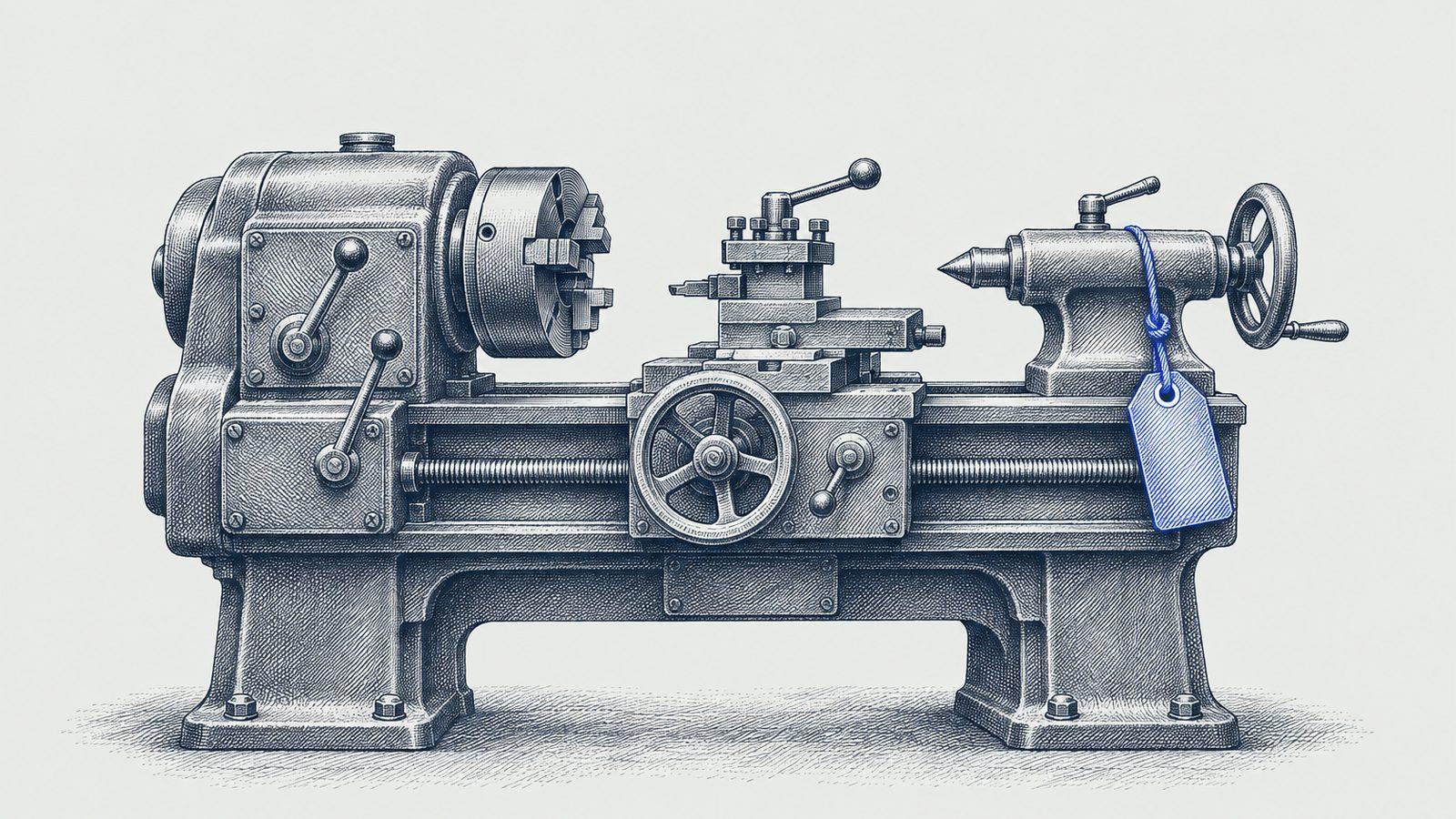
Laundromat equipment financing works like other equipment financing: the provider pays the distributor, the machines secure the deal, and you make fixed payments. Many distributors offer financing at the point of sale, sometimes with promotional rates on new machines. Compare that against at least one outside quote, and ask whether the package includes installation, plumbing and venting, which can be a large share of the cost.
Example: An owner replaces 18 washers and dryers for $138,000, including delivery and installation, and puts 10% down. On the $124,200 balance at an example 9.25% APR, a 60-month term costs about $2,593.28 a month and $31,397 in total interest. An 84-month term lowers the payment to about $2,014.06 but raises total interest to about $44,981.
The longer term helps monthly cash flow, but only take it if the machines will clearly outlast it. You can test terms in the business loan calculator. If you are weighing a lease instead of a loan, the equipment loan vs lease guide compares total cost over five years. A purchase may also qualify for the Section 179 deduction; confirm with a tax professional before you count on it.
How long do laundromat machines last, and do they hold value?
Commercial washers and dryers can run for many years with good maintenance, but their resale value falls much faster than their working life. Used machines sell into a thin market, and removing them from a store costs money. That is why equipment lenders lean on your cash flow and credit more than on resale, and why used or older machines usually get shorter terms and larger down payments.
When you buy a store, the age of the machines is part of the price. A store with machines near the end of their life needs a replacement budget in your first few years, and the lender will see that on the equipment list. Replacements financed through SBA 7(a) can run up to 10 years, or 15 when the IRS useful life of the asset class supports it, which is longer than many equipment lenders offer.
What should you do first?
Ask the seller for three years of tax returns, a year of utility bills, the lease and the equipment list before you agree on a price. Rebuild the cash flow from the tax returns, not the listing, and check that the lease plus your renewal options outlasts a 10-year loan. If the numbers hold, you can apply with Kingsley Funding to hear from lenders that finance acquisitions and equipment; it takes a few minutes and Kingsley Funding does not run a credit check. Kingsley Funding is not a lender, and the providers you are matched with may run their own credit check before making an offer.
Common questions
Can you get an SBA loan to buy a laundromat?
Yes. Laundromats are eligible for SBA 7(a) loans, and SBA's size standard for coin-operated laundries and drycleaners is $13.0 million in average annual receipts, which nearly every laundromat meets. For a buyer who does not already own the business, SBA requires at least 10% of total project cost as equity and a debt service coverage ratio of at least 1.25 based on the business's historical cash flow.
How much down payment do you need to buy a laundromat?
For an SBA 7(a) acquisition by a new owner, at least 10% of total project cost, which includes the price, closing costs and any working capital in the loan. A seller note on full standby can cover up to half of that 10%. Lenders can ask for more when the store's verified cash flow is thin or the equipment is old.
Do lenders count cash from coin machines?
Only what shows up in the records they can verify. For an SBA acquisition, the lender checks the seller's financial data against IRS tax transcripts, so revenue a seller says was collected but never reported does not support the loan. Card and app payment systems help, because they produce machine-level transaction reports that tie to bank deposits.
How long can a laundromat equipment loan last?
Equipment loans and leases often run about 2 to 7 years, depending on the provider and the machines. Under SBA 7(a), equipment financing generally runs up to 10 years and can reach 15 years if the IRS useful life of the asset class supports it, plus up to 12 months for installation. Used machines usually get shorter terms.
Why do lenders care so much about the laundromat lease?
Because the machines are bolted to a floor you do not own, and the business cannot move easily. Under SBA rules, when attached equipment or leasehold improvements are a large share of the loan or collateral, the lease, including renewal options only you can exercise, should run at least as long as the loan. Lenders also look for an assignment of the lease and a landlord's waiver.
Sources
- SBA SOP 50 10 8.1, Lender and Development Company Loan Programs (effective October 1, 2026): Appendix 15 changes of ownership, leased premises, maturities
- SBA Information Notice 5000-881797: FY 2027 7(a) program fees
- SBA Procedural Notice 5000-883564: Minimum equity requirement for veteran business acquisitions
- eCFR: 13 CFR 121.201, Small business size standards by NAICS industry (812310)
- U.S. Small Business Administration: 7(a) loans
- IRS Publication 946: How To Depreciate Property (Section 179)
Written and fact-checked by Kingsley Funding Editorial. Read our editorial standards to see how guides are researched, checked and corrected.
Kingsley Funding is not a lender and does not make credit decisions. We connect business owners with lenders, funders and other business-financing providers. Submitting an application does not guarantee approval, and any rates, amounts or timing are set by the provider, not by Kingsley Funding.